
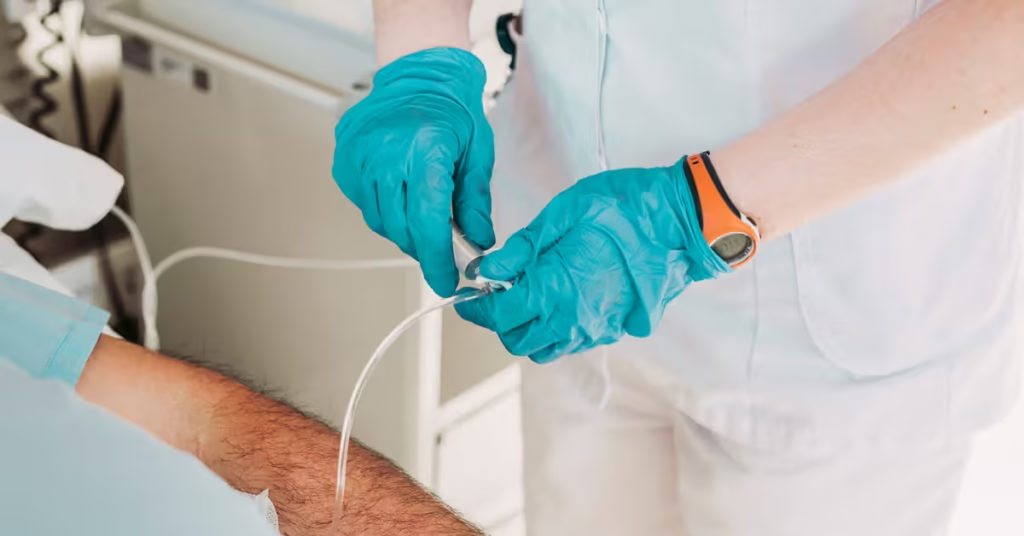
The word chemotherapy carries a specific image for most people: a patient rendered completely debilitated, unable to eat, losing all their hair, confined to bed for weeks on end. This image is not entirely fictional — it reflects the experience of patients who received earlier generation chemotherapy regimens, often at doses and with supportive care that was far less sophisticated than what is available today. What it does not reflect is what chemotherapy in Aurangabad at Karnawat Cancer Hospital looks like for the majority of patients receiving modern treatment in 2025.
Fear of chemotherapy side effects is one of the most common reasons patients delay seeking cancer treatment or refuse it entirely — and this delay costs lives. The fear is real and it deserves to be taken seriously. But it also deserves to be informed by what has actually changed in chemotherapy practice over the past two decades, because the gap between the public perception and the clinical reality has never been wider. Find Karnawat Cancer Hospital on Google to speak to our team about what treatment involves.
Need guidance? Book An Appointment at Karnawat Cancer Hospital today.
What Chemotherapy Actually Is?
Chemotherapy refers to the use of cytotoxic drugs — chemicals that kill rapidly dividing cells — to treat cancer. Cancer cells divide more rapidly than most normal cells, which makes them particularly vulnerable to these agents. The drugs are typically delivered intravenously through a drip over a period of hours, though some are taken orally at home. Treatment is given in cycles — a period of treatment followed by a rest period to allow normal cells to recover — rather than continuously.
The side effects of chemotherapy arise because the drugs also affect some normal rapidly-dividing cells — particularly those in the bone marrow (which produces blood cells), the hair follicles, and the lining of the digestive tract. This is the biological basis of the classic side effects: low blood counts, hair loss, nausea, and mouth sores. Understanding that these effects are predictable and manageable — rather than inevitable and catastrophic — is the first step in reducing chemotherapy-related fear.
What Has Actually Changed in Modern Chemotherapy
1. Anti-Nausea Medications Have Transformed the Experience
The most feared side effect of chemotherapy — nausea and vomiting — has been transformed by the development of modern anti-emetic medications. Drugs like ondansetron, granisetron, aprepitant, and dexamethasone, when given in combination before and after chemotherapy, control nausea and vomiting effectively in the vast majority of patients receiving most chemotherapy regimens. The image of a patient incapacitated by chemotherapy-induced vomiting for days after each cycle is largely a historical one for patients receiving modern supportive care.
2. Growth Factors Have Reduced Infection Risk
Low white blood cell counts (neutropenia) after chemotherapy increase the risk of serious infection, which was historically one of the most dangerous complications of treatment. Granulocyte colony-stimulating factors (G-CSF) — injectable medications that stimulate the bone marrow to produce more white blood cells — have dramatically reduced the severity and duration of neutropenia for patients receiving regimens that carry this risk. Their routine use has made high-dose chemotherapy significantly safer.
3. Newer Chemotherapy Agents Are More Targeted
The development of newer generation chemotherapy drugs has improved the therapeutic ratio — the balance between cancer-killing effect and normal tissue damage. Drugs like nab-paclitaxel, liposomal formulations, and antibody-drug conjugates deliver cytotoxic agents more selectively to tumour tissue, reducing the exposure of normal cells and therefore reducing side effects without compromising efficacy.
4. Oral Chemotherapy Has Changed the Treatment Experience
A growing number of cancer types are now treated with oral chemotherapy agents — tablets taken at home rather than intravenous infusions in a hospital setting. Drugs like capecitabine, temozolomide, and various targeted agents are taken at home according to a structured schedule. This fundamentally changes the treatment experience — patients maintain far more of their normal daily routine, avoid repeated hospital visits, and experience the psychological benefit of being at home during treatment.
The chemotherapy experience varies significantly between different drugs, different doses, and different cancer types. What a family member experienced ten years ago with a different drug for a different cancer is not a reliable guide to what you will experience with your specific treatment.
Need guidance? Book An Appointment at Karnawat Cancer Hospital today.
Managing the Side Effects That Do Occur
Hair Loss
Not all chemotherapy regimens cause hair loss. Drugs like taxanes and anthracyclines typically cause significant hair loss, while many other agents do not. When hair loss does occur, it is almost always temporary — hair regrows after treatment ends, often with a different texture initially. Scalp cooling — a technique that reduces blood flow to the scalp during infusion — is available with certain regimens and can significantly reduce hair loss for some patients.
Fatigue
Cancer-related fatigue is the most consistently reported side effect across all treatment types. It is distinct from normal tiredness — it does not fully resolve with rest and can significantly affect daily function. Management includes structured rest, light physical activity (which paradoxically reduces fatigue), nutritional optimisation, treatment of contributing factors like anemia, and in some cases medications. Acknowledging fatigue as a real and manageable symptom rather than something to push through is an important shift in how patients approach treatment.
Peripheral Neuropathy
Some chemotherapy drugs — particularly platinum compounds and taxanes — cause peripheral neuropathy: numbness, tingling, or pain in the hands and feet. Dose adjustments, early reporting of symptoms, and specific supportive measures can limit the severity and duration of neuropathy. Patients who communicate symptoms early allow their oncologist to adjust treatment before the neuropathy becomes severe or permanent.
Beyond Chemotherapy — The Treatment Landscape in 2025
For a growing number of cancer types, chemotherapy is no longer the only or even the primary treatment. Immunotherapy — which activates the patient’s own immune system to recognise and destroy cancer cells — has produced remarkable outcomes in melanoma, lung cancer, kidney cancer, and several other tumour types, with a very different side effect profile from chemotherapy. Targeted therapy uses drugs that specifically block the molecular pathways driving a particular tumour’s growth, producing high response rates with lower toxicity in patients whose tumours carry the relevant genetic alterations.
At Karnawat Cancer Hospital, Dr. Khushboo Jain Karnawat and the oncology team use molecular tumour profiling to identify which treatments a specific tumour is most likely to respond to, ensuring that each patient receives the most appropriate treatment for their cancer rather than a generic protocol.
Frequently Asked Questions
Q: Will I be able to work during chemotherapy?
Many patients continue to work during chemotherapy, particularly if their role does not involve heavy physical demands. The days immediately following each infusion are typically the most symptomatic. With modern anti-emetic support, many patients find that they can resume normal activities within two to three days of each cycle. The specific impact depends on the regimen and the individual patient’s response.
Q: Does chemotherapy always cause hair loss?
No. Hair loss depends entirely on the specific drugs used. Some of the most commonly used chemotherapy regimens for breast cancer, for example, cause significant hair loss. Many regimens used for gastrointestinal, lung, or gynaecological cancers cause minimal to no hair loss. Your oncologist will tell you specifically what to expect from your regimen.
Q: How will I know if chemotherapy is working?
Response to chemotherapy is assessed through scheduled imaging — CT scans or PET-CT scans — at defined intervals during treatment, typically after two to three cycles. Blood tumour markers, where relevant, are also monitored. Your oncologist will review the imaging findings with you and discuss whether the treatment plan needs to be continued, modified, or changed.
Your Fear of Chemotherapy May Be Based on Information That Is No Longer Accurate.
Speak to the oncology team at Karnawat Cancer Hospital about what modern treatment actually involves for your specific diagnosis.
Visit karnawatcancerhospital.com or find us on Google to book your consultation.
Need guidance? Book An Appointmentat Karnawat Cancer Hospital today.
Google: Karnawat Cancer Hospital on Google | Chemotherapy: Chemotherapy in Aurangabad | Our Team: Dr. Khushboo Jain Karnawat